
Of course, security and basic care for the children is the most important thing, but school is particularly important in everyday life. In this text I would like to explain this briefly and plead for supporting education for children.
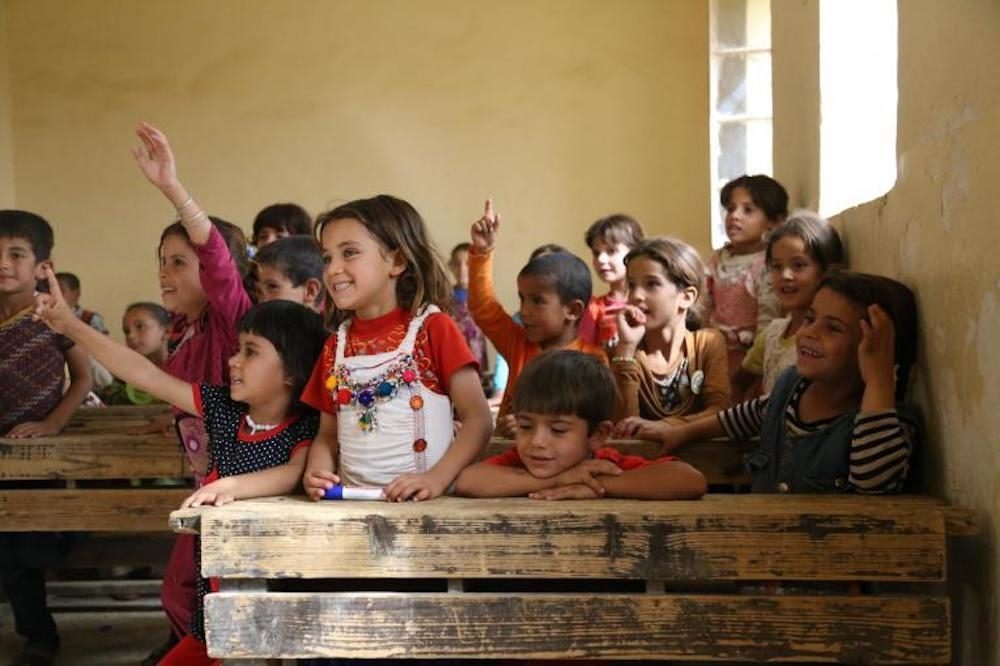
People living in war are exposed to constant fear. When will the next bomb come, how longcan one stay indoors and how long will food last? Children often have to stay at home forsafety reasons and are on constant alert. Even if school doesn’t seem important at such atime, it can offer children a daily routine that brings some normality and distraction. Contactwith other children is essential for development. In addition, a clear programme provides acertain structure that can give them orientation in the chaos.Besides the importance for everyday life, education is of course also the future. A basiceducation enables children to find their feet again more quickly after a war or when theyflee. Wars quickly result in all schools being closed. One consequence of this is that anentire generation has no chance to learn to read and write. Essential tools for life are not learned. If we want to work for children, we must not only think about food and drink, butalso about education, exchange with other children and opportunities to be a child.Because a school needs many resources, such as books, writing materials, blackboards andpaid teachers, many regions in war zones close because immediate protection is prioritised.This is quite understandable, but these austerity measures hit the smallest in society who could use the school so much. Education for children is ultimately very valuable not onlyfor the moment, but also in the long term. When the war is over, it would be tragic to have awhole youth without prospects and without the knowledge to rebuild everything.